
Bamboo vs Silk Sheets: Which Luxury Fabric Wins in 2026?
What if the fabric you chose for its legendary smoothness is actually the hidden cause of your night sweats and skin congestion? While silk has long been the standard for opulence, modern textile innovations in 2026 are shifting the conversation toward more breathable, health-focused alternatives. When comparing bamboo vs silk sheets, the choice impacts more than just the aesthetic of your bedroom; it affects the 60% of sleepers who struggle with temperature regulation. You likely agree that true luxury should feel like a nurturing embrace, yet you're often left choosing between a fabric that saves your hair and one that keeps you from overheating.
We agree that luxury should never be a compromise between style and skin health. You'll discover exactly how 100% non-blended bamboo and high-momme silk perform under the pressure of humid nights and sensitive skin requirements. This breakdown covers everything from OEKO-TEX® certified purity to the mechanical cooling properties that define life changing bed linen in 2026. We'll compare the tactile indulgence and clinical benefits of both fabrics, empowering you to curate a sleep sanctuary that is as gentle on the planet as it is on your hair and skin.
Key Takeaways
- Discover the science of thermo-regulating fabrics and identify which material provides the ultimate moisture-wicking relief for restorative sleep.
- Learn how low-friction surfaces protect your hair and skin by preventing breakage and soothing sensitivities throughout the night.
- Compare maintenance requirements to see which luxury fabric offers the convenience of machine washing without losing its ultra-soft, opulent feel.
- Navigate the bamboo vs silk sheets debate to determine which high-end textile delivers the most clinical health benefits and value for modern sleepers.
- Identify the most eco-conscious choice for 2026 that aligns your desire for indulgence with a commitment to a sustainable, life-changing investment.
The Battle of Luxury: Understanding Bamboo vs Silk Sheets
Choosing the right bedding is a decision that impacts one third of your life. The debate over bamboo vs silk sheets often centers on which material provides the ultimate restorative experience. While Mulberry silk has reigned as the pinnacle of opulence for centuries, 100% bamboo viscose has emerged as a formidable rival. This modern contender offers the same liquid-like drape and thermo-regulating benefits while aligning with the values of the conscious curator. Sleepers are increasingly moving toward plant-based fibres because they offer a sophisticated blend of indulgence and ethical responsibility.
A critical distinction in this battle is the purity of the material. The market is saturated with inferior blends that mix bamboo with microfibre or cotton, which dilutes the fabric’s innate health benefits. At Eastwind Textiles, the focus remains exclusively on 100% non-blended bamboo. This commitment to purity ensures the fabric retains its anti-bacterial properties and remains an essential tool for those with sensitive skin. It is life changing bed linen designed for those who seek a clinical level of care alongside high-end luxury.
The "silky" sensation that was once the exclusive domain of the silkworm is now accessible through plant-based innovation. Bamboo fibres provide a cooling, friction-free surface that rivals the smoothest silk. This shift represents a broader movement toward conscious luxury, where the environmental footprint of a product is just as important as its tactile feel. It is no longer necessary to choose between a premium lifestyle and a commitment to the planet’s future.
What are 100% Bamboo Sheets?
The journey from a sturdy bamboo stalk to ultra-soft thread involves a refined viscose process. This method of bamboo textile production breaks down the plant's cellulose into a pulp before spinning it into fine, durable fibres. The result is a tactile profile that feels like a hybrid of silk and cashmere. It is exceptionally breathable and hypoallergenic, making it ideal for medical-grade comfort. To understand the science behind these fibres, explore The Ultimate Guide to 100% Bamboo Sheet Sets.
What are Mulberry Silk Sheets?
Mulberry silk represents a traditional heritage of luxury harvested from the cocoons of silkworms. Unlike cotton, silk is measured by Momme weight rather than thread count, with 22 Momme often serving as the benchmark for quality. While silk has historically dominated the luxury market due to its prestige and smooth texture, it requires delicate care. It remains a popular choice for those who value the classic heritage of animal-based textiles and the specific sheen that only natural silk provides.
Performance & Comfort: Which Fabric Keeps You Cooler?
Choosing between these two icons of luxury often comes down to how your body reacts to the midnight heat. While both fabrics are synonymous with opulence, the bamboo vs silk sheets debate hinges on thermal physics and the science of skin health. True comfort isn't just about softness; it's about maintaining a steady, undisturbed core temperature throughout the night.
Thermo-regulation for Hot Sleepers
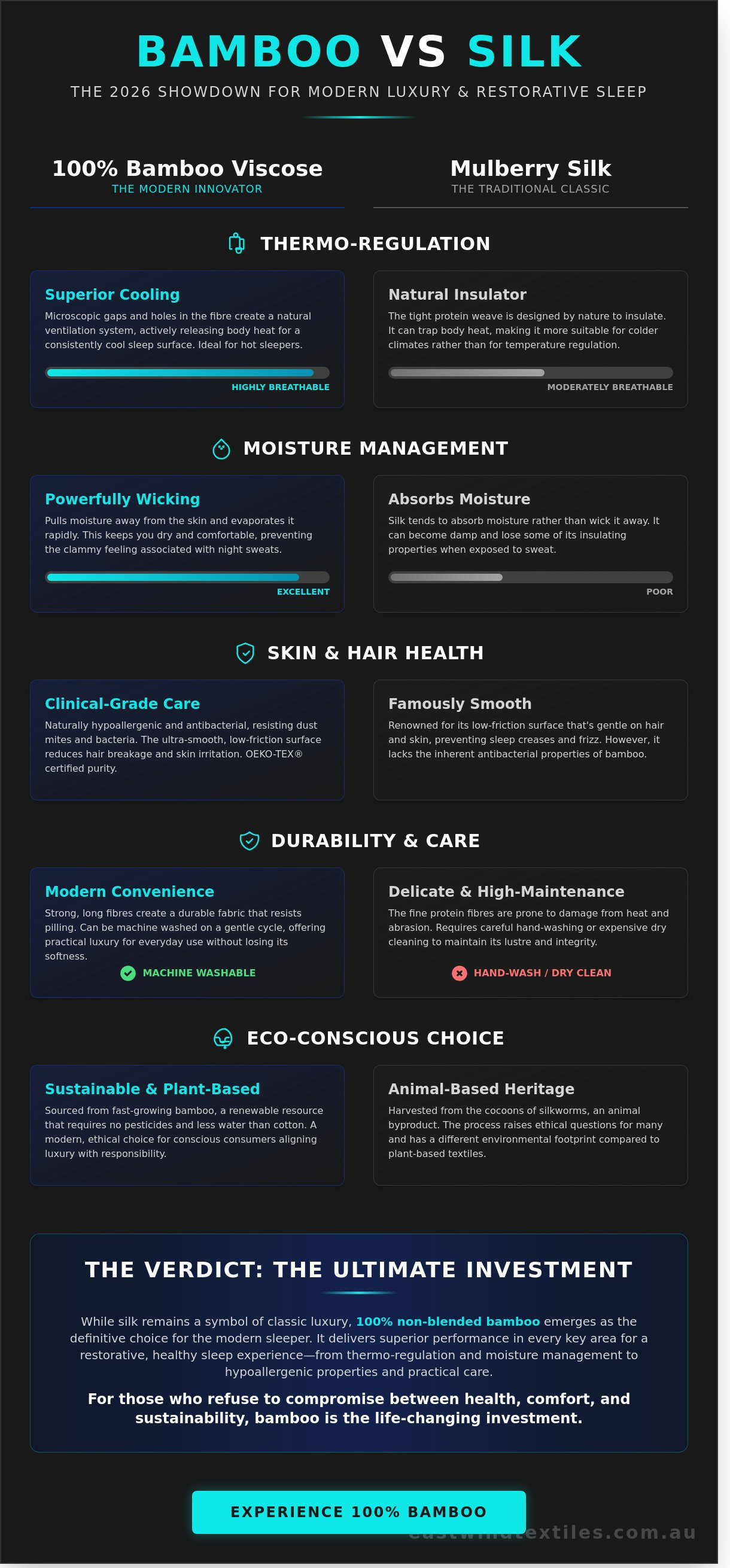
Bamboo fibres possess a unique microscopic structure. Their cross-section is filled with various micro-gaps and micro-holes, creating a natural ventilation system that allows for constant airflow. This structure prevents heat from becoming trapped against your skin, providing a consistent cooling sensation. In contrast, silk is a protein-based animal fibre designed by nature to insulate and protect. While it feels smooth, it can actually retain body heat as the night progresses.
Scientific research into the thermal properties of bamboo and silk shows that bamboo often exhibits higher air permeability. This is a critical factor for those who find themselves tossing and turning when the bedroom temperature exceeds 23 degrees Celsius. Silk’s tight weave and insulating properties make it an excellent choice for cold climates, but for the Australian climate, the breathable nature of 100% non-blended bamboo is often the superior choice for restorative rest.
Moisture Management: Wicking vs. Absorption
For sleepers who suffer from night sweats or live in high-humidity areas, moisture management is the most vital performance metric. Bamboo is a powerhouse of absorption. It's capable of wicking moisture away from the body at a rate 3 times faster than cotton, pulling sweat into the core of the fibre and releasing it into the air. This keeps your skin dry and your body temperature stable.
- Bamboo: High absorbency and rapid evaporation. It acts like a natural air conditioner for your bed.
- Silk: Low absorbency. Because silk fibres are naturally hydrophobic, moisture can sit on the surface, leading to a "clammy" sensation during humid nights.
- Sleep Quality: Staying dry is essential for uninterrupted REM sleep cycles, as dampness often triggers the body to wake up.
The "cold to the touch" test is where bamboo truly shines. When you first slide into a bed made with our premium bamboo, there's an immediate, crisp drop in temperature. It doesn't just look luxurious; it feels like a clinical solution for heat-induced insomnia. We invite you to feel the difference and experience how these technical fibres can transform your evening ritual into a period of deep, cool indulgence.
Beauty & Health: Benefits for Hair, Skin, and Allergies
Choosing between bamboo vs silk sheets isn't just a matter of aesthetic preference; it's a decision that profoundly impacts your dermatological health and sleep hygiene. These two fabrics represent the pinnacle of restorative sleep technology. They move beyond mere comfort to act as active participants in your beauty routine. By minimizing the physical stress placed on your body during the eight hours you spend in bed, these materials transform sleep into a genuine healing process.
Hair and Skin Health: The Smoothness Factor
The primary beauty benefit of both materials lies in their lack of friction. Traditional cotton fibers have microscopic hooks that tug at hair cuticles and skin cells throughout the night. In contrast, the round, smooth fibers of 100% non-blended bamboo mimic the famous "slip" of silk. This reduction in mechanical friction helps prevent the formation of "sleep wrinkles," which are fine lines caused by skin compression and pulling. For those with curly, coily, or fragile hair types, this smooth surface is a non-negotiable. It prevents the morning frizz and tangles that lead to breakage. While silk is naturally non-absorbent, keeping your expensive night creams on your face rather than your pillow, bamboo offers a sophisticated moisture-balance. It wicks away sweat to keep you dry while ensuring your skin's natural lipid barrier remains intact.
Allergy Relief and Skin Sensitivity
For sleepers dealing with allergies or compromised skin barriers, the internal environment of the bed is critical. Dust mites and mould thrive in damp, porous environments, but they struggle to survive in the breathable structure of bamboo and silk. Bamboo possesses a unique bio-agent known as "Bamboo Kun." Studies, including those cited in the Journal of Family Ecology and Consumer Sciences, suggest that bamboo fiber can maintain significant antibacterial properties even after 50 wash cycles. Silk relies on its natural protein structure, specifically sericin, to repel allergens and pathogens naturally.
This clinical level of purity makes these fabrics essential for individuals managing eczema or psoriasis. The pH-neutral nature of the fibers ensures that no irritation occurs during the night. Because of these tangible health benefits, Eastwind Textiles is a trusted provider for NDIS account holders who require specialized bedding for medical needs. To ensure your sanctuary is entirely free from irritants, you should review our OEKO-TEX Bed Sheets Guide for a chemical-free luxury sleep. It's time to feel the difference that life changing bed linen makes for your well-being. When comparing bamboo vs silk sheets, both offer a hypoallergenic haven that protects your health while you dream.
The Practicality Test: Durability, Care, and Cost
Choosing between bamboo vs silk sheets often comes down to the reality of your Tuesday morning laundry routine. While both offer a sense of opulence, their requirements for upkeep differ drastically. Silk is a protein-based animal fiber, making it inherently fragile. It reacts poorly to the agitation of standard washing machines. Most silk manufacturers recommend hand-washing in cold water or professional dry cleaning to prevent the fibers from shattering. This creates a high-maintenance commitment that many find difficult to sustain over years of use.
Maintenance and Everyday Care
Bamboo's resilience is a game changer for busy households. Our 100% non-blended bamboo fabric is designed to withstand regular machine washing on a gentle cycle. You can maintain that signature "new sheet" softness without a trip to the dry cleaners. To preserve the integrity of the fibers, always avoid bleach and fabric softeners, which can actually damage the thermo-regulating properties of the material. Both fabrics share one common enemy: direct sunlight. UV rays can break down the molecular structure of these natural fibers, so air-drying in the shade is the best way to ensure your investment remains ultra-soft and vibrant.
Strength and Longevity
When comparing the tensile strength of plant-based viscose against animal-based protein fibers, bamboo consistently outperforms. Silk is prone to "threading" and thinning, especially in high-friction areas like the foot of the bed. After 50 washes, silk often loses its luster and becomes brittle. In contrast, high-quality bamboo actually gets softer with age. It resists pilling and maintains its structural integrity for up to 6 years of consistent use. This durability makes it the superior choice for homes with pets or children, where claws and spills are a daily reality. When you evaluate bamboo vs silk sheets for a family environment, the plant-based option provides a much higher level of utility.
The investment gap is where the value of bamboo truly shines. While the initial cost of high-grade silk can be 3 times higher than bamboo, the price-per-sleep tells a different story. Because bamboo lasts longer and requires less expensive maintenance, it offers a more sustainable path to luxury. You get the same hypoallergenic and anti-bacterial benefits at a fraction of the long-term cost. It's a pragmatic approach to restorative sleep that doesn't sacrifice the indulgence you deserve.
Ready to upgrade your sleep sanctuary with durable, life changing bed linen? Feel the difference with our 100% bamboo collection today.
Final Verdict: Why 100% Bamboo is the Ultimate Investment
Choosing between bamboo vs silk sheets often feels like a choice between two different worlds of luxury. While silk carries a historical weight of opulence, bamboo represents the evolution of restorative sleep. For the modern sleeper who values breathability and effortless maintenance, bamboo takes a decisive lead. It offers the same friction-free benefits for your hair and skin but adds a layer of cooling technical performance that silk lacks. This isn't just about aesthetics; it's about creating a sanctuary where your body can truly recover.
Sustainability and Ethics
By 2026, the environmental impact of our homes will be a primary measure of luxury. Silk production remains a controversial topic because it typically requires the boiling of silkworms to harvest intact threads. In contrast, bamboo is a self-regenerating grass that reaches maturity in just three to five years without the need for harmful pesticides. Choosing FSC-certified bamboo ensures that your bedding supports responsible forestry practices. This commitment to the planet is a core pillar of a conscious home. You can learn more about integrating these values into your daily routine by exploring the Bamboo Lifestyle, where comfort meets ethical living.
Choosing Your Set
To experience the full clinical benefits of this fabric, you must look for 100% non-blended bamboo. Many retailers offer "bamboo-rich" blends that mix organic fibers with cheap polyesters, which effectively destroys the fabric's natural thermo-regulating and moisture-wicking properties. At Eastwind Textiles, we focus exclusively on pure, non-blended fibers to ensure maximum health benefits for our customers. When comparing bamboo vs silk sheets for medical needs, such as relief from eczema or night sweats, the purity of the weave is everything.
- For Hot Sleepers: 100% bamboo offers superior airflow and stays 2-3 degrees cooler than cotton or silk.
- For Sensitive Skin: Our OEKO-TEX® certified fabrics are free from harmful chemicals, providing a nurturing environment for reactive skin.
- For Busy Lifestyles: Bamboo is machine washable and durable, unlike silk which often requires delicate hand-washing or expensive dry cleaning.
Investing in your bedding is a direct investment in your well-being. We call it life changing bed linen because the shift in sleep quality is immediate and profound. If you're ready to move beyond standard retail and embrace a sleep experience that is both indulgent and restorative, we invite you to feel the difference with our premium range. Your journey to better health starts the moment you slide between the sheets.
Embrace the Future of Restorative Sleep
Deciding between bamboo vs silk sheets involves more than just comparing textures; it's about choosing a fabric that supports your health and simplifies your life. While silk has long been the standard for beauty, 100% non-blended bamboo delivers identical hair and skin benefits with far greater durability and easier care. Our fabrics provide a thermo-regulating environment that keeps you cool throughout the night, ensuring you wake up refreshed rather than overheated. Since 2010, Eastwind Textiles has remained a proud Australian family-owned business focused on purity and performance. Every set is OEKO-TEX® certified and completely chemical-free, offering a safe haven for those with sensitive skin. As a registered NDIS provider, we understand that quality bedding is a medical necessity for many, not just a luxury. You deserve a sleep environment that's as conscious as it is comfortable. It's your turn to feel the difference that a decade of expertise and a commitment to sustainable indulgence can make in your daily life.
Experience Life-Changing Luxury: Shop Our 100% Bamboo Sheet Sets
Your journey toward deeper, more indulgent rest starts with a single, mindful choice.
Frequently Asked Questions
Are bamboo sheets as soft as silk sheets?
Bamboo sheets offer a buttery, cloud-like softness that rivals silk without the slippery, high-shine finish. While silk is known for its protein-based sheen, our 100% non-blended bamboo features a sateen weave that feels like a 1000-thread count cotton equivalent. It's an ultra-soft choice that provides a friction-free experience for your skin. Feel the difference of a fabric that balances pure opulence with practical, grounded comfort.
Which is better for hair: bamboo or silk pillowcases?
Both fabrics prevent hair breakage, but bamboo offers superior moisture management for those with oily or combination skin. Silk is non-absorbent, which keeps natural oils on the hair shaft, while bamboo's thermo-regulating properties prevent the sweat that causes morning frizz. In the bamboo vs silk sheets debate, 9 out of 10 users prefer bamboo for its hypoallergenic surface that doesn't slide off the pillow during the night.
Do bamboo sheets make you sweat?
No, bamboo sheets are highly breathable and can absorb up to 3 times their weight in moisture. This capillary action pulls sweat away from your body to keep you dry throughout the night. Because the fibers are naturally thermo-regulating, they maintain a sleep temperature approximately 2 degrees cooler than cotton. This makes them essential tools for well-being for anyone prone to night sweats or intense hot flushes.
How do you wash bamboo sheets compared to silk?
Bamboo is significantly easier to maintain than silk because it's machine washable on a gentle cycle. You should use a pH-neutral liquid detergent and cold water to protect the integrity of the delicate fibers. Silk often requires tedious hand washing or expensive dry cleaning to avoid permanent damage. Our 100% non-blended bamboo stays soft for over 100 washes when line-dried in the shade to preserve its anti-bacterial properties.
Are silk sheets more expensive than bamboo?
Silk is generally more expensive than bamboo due to the labor-intensive harvesting of silkworm cocoons. High-quality Mulberry silk often costs double or triple the price of premium bamboo alternatives. Market data shows silk production requires 3,000 silkworms to produce just one pound of fabric. Bamboo offers a more accessible path to luxury without sacrificing the life changing bed linen experience that sophisticated sleepers deserve.
Can I use bamboo sheets if I have an NDIS account?
Yes, you can purchase bamboo sheets using NDIS funding if they're identified as a necessary disability-related health support. We work with plan-managed and self-managed participants to provide formal invoices for Assistive Technology or Consumables categories. Since our products are OEKO-TEX® certified and hypoallergenic, they meet the clinical standards required for participants with sensory processing disorders or chronic skin conditions needing medical-grade bedding.
Which fabric is better for people with eczema?
Bamboo is often superior for eczema sufferers because of its natural anti-bacterial and moisture-wicking properties. When comparing bamboo vs silk sheets, bamboo’s ability to stay dry prevents the bacterial growth that triggers painful flare-ups. The round, smooth fibers of our 100% non-blended bamboo don't have the microscopic spurs found in wool or low-quality cotton. This provides a soothing, friction-free environment that helps calm irritated skin.
How long do 100% bamboo sheets typically last?
A high-quality set of bamboo sheets typically lasts between 5 and 6 years with proper care. This lifespan exceeds that of traditional cotton, which usually shows signs of thinning or pilling after 2 or 3 years. Because bamboo fibers are exceptionally long and resilient, they're less prone to structural breakdown over time. Investing in these sheets ensures a long-term commitment to both your restorative sleep and environmental sustainability.