
Why Do My Sheets Make Me Itch? 5 Hidden Causes and How to Find Relief
According to CDC data published on January 8, 2026, 31.7% of adults now live with diagnosed allergies or eczema, yet many still struggle to find true comfort in their own beds. You likely find yourself wondering "why do my sheets make me itch" even when your high thread count cotton looks pristine and feels soft to the touch. It is a frustrating cycle to invest in luxury bedding only to be met with abrasive micro-trauma or invisible chemical off-gassing that disrupts your restorative rest. You deserve a sleep environment that acts as a nurturing sanctuary rather than a source of physical distress.
You will discover the biological and chemical reasons your bedding triggers irritation, from the June 1, 2026 OEKO-TEX updates on restricted substances like DBDPE to the mechanical friction of traditional fibres. This guide provides a clear path toward immediate relief and a checklist for selecting 100% non-blended bamboo that offers the silky, thermo-regulating protection your skin deserves. We invite you to feel the difference as we explore the five hidden causes of nocturnal itching and how to curate life changing bed linen for a truly hypoallergenic sleep sanctuary.
Key Takeaways
- Understand the biological "itch-scratch cycle" and how nocturnal pruritus turns standard bedding into a source of physical skin irritation.
- Identify hidden chemical residues, such as formaldehyde and PFAS, to finally answer the question "why do my sheets make me itch" even when they look clean.
- Discover why traditional cotton and heat-trapping synthetics can cause mechanical trauma to sensitive skin compared to smoother, rounded fibres.
- Learn actionable detox steps for your laundry routine, including the essential "Double Rinse" rule to eliminate irritating detergent build-up.
- Realise the restorative power of 100% non-blended bamboo, a silky-smooth and thermo-regulating fabric designed to glide over delicate skin.
The Science of the Itch: Why Your Bedding Triggers Irritation
When the sun sets and you retreat to your bedroom, your body begins a complex process of cellular repair and temperature regulation. For many, this transition is interrupted by nocturnal pruritus, the clinical term for itching that intensifies during the night. You may find yourself lying awake wondering why do my sheets make me itch even when the fabric looks clean and feels relatively soft. This sensation is rarely a random occurrence; it's a physiological response to the environment you've created within your bed. The "itch-scratch cycle" is a primary culprit here, where a minor irritation from a fabric fibre triggers a scratch reflex. This scratching further damages the skin barrier, releasing inflammatory histamines that create even more itching.
Contact dermatitis is a localized skin reaction to external triggers in fabrics that can transform a night of rest into a cycle of discomfort. Understanding whether your skin is reacting to a physical texture or a chemical allergen is the first step toward reclaiming your sleep sanctuary.
Mechanical Irritation vs. Allergic Reactions
The distinction between mechanical and allergic irritation is vital for finding relief. Mechanical irritation occurs when rough, protruding fibres create micro-trauma on the skin's surface. Even high thread count cotton can be deceptive; if the fibres are short-staple, they often poke through the weave like tiny needles. This is a common reason why do my sheets make me itch during movement. In contrast, allergic reactions are immune responses to substances like "wrinkle-free" resins or residual dyes. You'll recognize these by symptoms like hives, intense redness, or a burning sensation. Night-time is when these sensitivities peak because your body temperature naturally rises through vasodilation, which increases skin permeability and heightens the perception of itch signals.
The Role of the Skin Barrier in Sleep
Your skin's outermost layer, the stratum corneum, acts as a protective shield. During sleep, friction from tossing and turning can disrupt this delicate barrier, especially if you're using abrasive or synthetic materials. For the 7.7% of U.S. adults diagnosed with eczema as of 2024, this friction is more than a nuisance; it's a health risk. People with eczema or psoriasis have a compromised skin barrier that is far more susceptible to "itchy sheet syndrome." These conditions require a non-abrasive, silky-smooth surface that allows the skin to glide rather than snag. At Eastwind Textiles, we view bedding as a medical-grade tool for well-being, which is why our 100% non-blended bamboo is often sought by those with NDIS accounts. A truly nurturing sleep environment must prioritize the integrity of your skin barrier by providing a friction-free surface for recovery.
By choosing fabrics that respect your biology, you can break the itch-scratch cycle once and for all. It's about moving beyond standard retail and investing in life changing bed linen that supports your health as much as your comfort.
Hidden Culprits: From Dust Mites to Chemical Residues
Even when you wash your bedding weekly, invisible irritants can linger within the fibres of your sheets. If you've ever asked yourself why do my sheets make me itch, the answer often lies in the microscopic world of dust mites or the chemical treatments used during manufacturing. These factors are frequently overlooked in standard retail descriptions, yet they are the primary drivers of skin inflammation and interrupted sleep. A truly clean bed requires more than just soap and water; it requires a fabric that resists these hidden invaders from the very beginning.
The Dust Mite Dilemma in Australian Homes
Dust mites thrive in warm, humid environments, making many Australian homes a perfect breeding ground. In coastal regions where humidity levels often stay above 60%, these microscopic arachnids multiply rapidly within the layers of your bedding. They don't bite, but their droppings contain potent proteins that trigger allergic reactions and skin flare-ups. Traditional cotton weaves often act as a "buffet" for these pests because they easily trap the 500 million skin cells humans shed daily. Standard washing at low temperatures often fails to remove these biological triggers, leading to persistent nocturnal discomfort that leaves your skin feeling raw and sensitive by morning.
Chemical Finishes: The Invisible Irritants
Modern "easy-care" or "wrinkle-free" sheets are often treated with formaldehyde resins to maintain their crisp, smooth appearance. These chemicals can lead to Textile contact dermatitis, a condition where the skin reacts to finishing agents or synthetic dyes. As of June 1, 2026, the OEKO-TEX Standard 100 has implemented even stricter limit values for harmful substances like Bisphenols, reducing them from 1,000 mg/kg to 200 mg/kg to better protect consumer health. If your bedding lacks this certification, it might contain invisible irritants that seep into your skin as you sleep. Beyond manufacturing chemicals, residual detergents and fabric softeners often get trapped in the weave of lower-quality fabrics. This creates a waxy buildup that attracts more dust and blocks airflow, resulting in a heat-induced itch that prevents restorative rest. To ensure your skin stays protected, consider switching to hypoallergenic bamboo bedding that naturally resists these common triggers through its pure, non-blended construction.
By identifying these hidden culprits, you can begin to detoxify your sleep environment. It's a vital step in moving from a state of constant irritation to the serene, indulgent comfort of life changing bed linen.
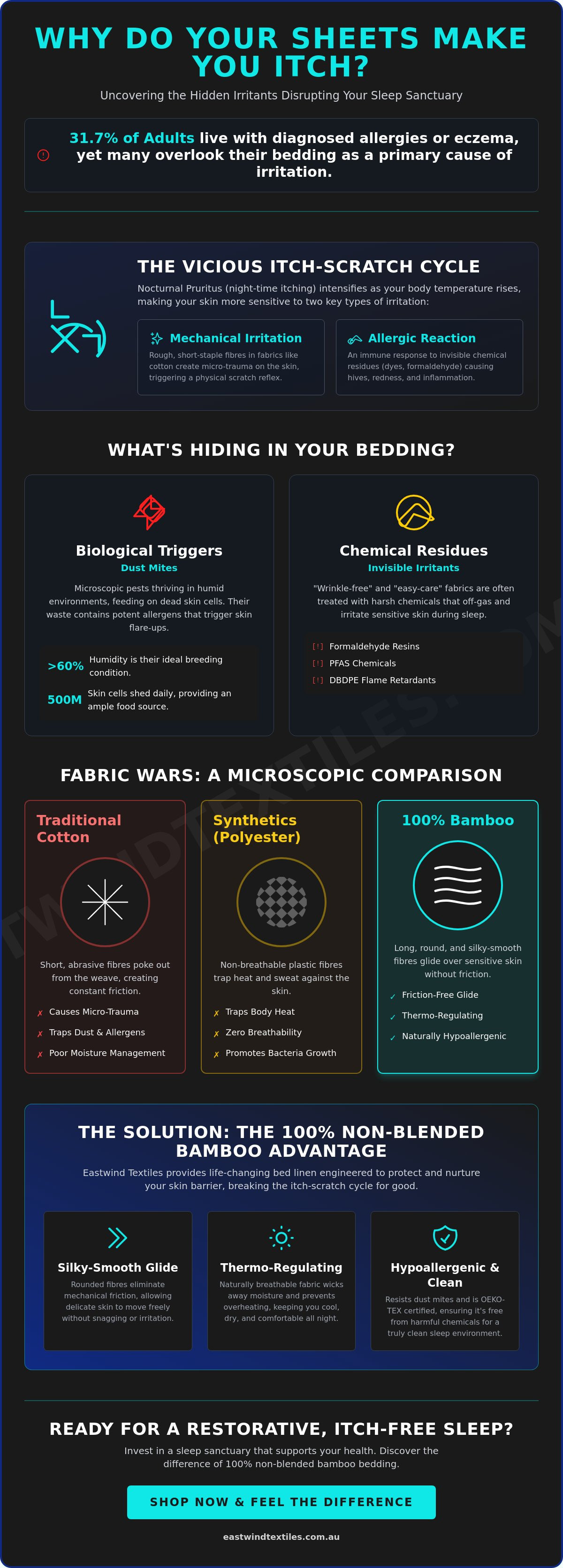
Fabric Wars: Why Your Current Sheets Might Be Failing Your Skin
Many people assume that any natural material will be kind to their skin, yet they still wake up scratching. If you are struggling to understand why do my sheets make me itch, it's time to look closer at the microscopic structure of your bedding. While cotton is a natural plant fibre, its physical composition often involves short, jagged strands that can create mechanical irritation. High thread count is frequently marketed as a mark of quality, but this metric can be misleading. Manufacturers often use thinner, lower-quality yarns twisted together to inflate thread counts, resulting in a fabric that feels heavy and abrasive rather than light and breathable.
The difference lies in the fibre's shape. Under a microscope, cotton fibres look like flattened, twisted ribbons with rough edges. In contrast, 100% non-blended bamboo fibres are naturally round and smooth. This structural purity allows the fabric to glide over your skin without catching on delicate areas. Identifying common irritants and allergens is essential for anyone with sensitive skin, as even the most expensive traditional sheets can harbour triggers that disrupt your sleep cycle.
The Cotton Conundrum: Short Fibres and Pilling
Cotton fibres are prone to breaking over time, especially during frequent laundering. These broken ends twist together to form "pills," those small, hard bumps on the surface of your bedding. These pills act like fine-grit sandpaper against your skin, causing micro-trauma every time you move. Even organic varieties can be scratchy for those with sensory processing issues or eczema. Cotton also excels at retaining moisture. While this sounds positive, it actually creates a damp environment where bacteria can flourish, further aggravating existing skin conditions and leading to that persistent itchy sensation.
Synthetic Fabrics and the 'Heat Itch'
Synthetic blends, particularly those containing polyester, are a common trap for the unsuspecting shopper. These fabrics are essentially plastic, which means they lack the thermo-regulating properties of natural bamboo. Polyester traps body heat against your skin, leading to a "heat itch" or prickly heat. This lack of breathability disrupts your skin's natural pH balance and prevents effective moisture-wicking. When sweat sits on the skin's surface for hours, it acts as a primary reason why do my sheets make me itch during the warmer months. True relief comes from a fabric that actively moves heat and moisture away from the body, ensuring a cool, dry, and indulgent night of rest.
The Road to Relief: How to Detox Your Sleep Environment
Transforming your bedroom into a hypoallergenic sanctuary requires a clinical attention to detail that goes beyond simple tidying. If you've addressed your fabric choice but still find yourself asking why do my sheets make me itch, the culprit likely hides in your laundry routine. Residual chemicals from standard detergents act as persistent irritants that cling to even the finest fibres, creating a barrier between you and restorative rest. We recommend switching to a pH-neutral, fragrance-free detergent specifically formulated for sensitive skin. To guarantee total purity, implement the "Double Rinse" rule. This extra cycle ensures that every trace of surfactant is flushed away, leaving only the clean, indulgent texture of the fabric against your skin. This simple adjustment often provides immediate relief for those suffering from the 31.7% of allergy-related sleep disruptions reported in 2024.
Laundering for Sensitive Skin
Fabric softeners are often marketed as a luxury, but for those with sensitive skin, they are a hidden danger. These products work by coating fibres in a waxy, chemical film that traps dead skin cells and moisture, creating a breeding ground for bacteria. Ditch them immediately to allow your bedding to breathe. For effectively killing dust mites without compromising the integrity of your bedding, a water temperature of 60°C is the gold standard. To maintain a truly sterile environment, health experts suggest replacing pillows every 18 to 24 months and using high-quality protectors. For those using our premium range, following the specific guide on how to wash bamboo sheets will help preserve the fabric's life changing softness while ensuring it remains medically safe for your skin.
Creating a Hypoallergenic Bedroom
Your bedroom's air quality is just as vital as the sheets themselves. Vacuuming with a HEPA filter removes 99.97% of dust, pollen, and bacteria that settle into floorboards and rugs. A simple yet effective tip is to "air out" your bed in the morning. Instead of making it immediately, peel back the covers for at least one hour. This allows moisture from sleep to evaporate, making the environment less hospitable for mites. In the Australian climate, keeping bedroom humidity below 50% using a dehumidifier can significantly reduce biological triggers. This disciplined approach to hygiene ensures that the question of why do my sheets make me itch becomes a thing of the past. Protecting your health is an investment in your future well-being. Experience the purity of 100% bamboo bedding and begin your journey toward restorative, itch-free sleep.
The Bamboo Advantage: Why 100% Non-Blended Bamboo is 'Life Changing'
Finding a permanent answer to why do my sheets make me itch requires a shift from standard retail options toward a more conscious, clinical choice in fabric. At Eastwind Textiles, we adopt an Expert Caretaker approach, ensuring that every piece of life changing bed linen we provide is crafted from 100% non-blended bamboo. This commitment to purity isn't just about luxury; it's a fundamental health requirement for Australians managing chronic skin conditions. We understand that for those with medical needs, bedding is a functional tool. This is why we offer NDIS availability to support the skin health and well-being of our community. Our bamboo is naturally anti-bacterial and thermo-regulating, providing a sophisticated solution that balances opulence with technical performance.
Why Purity Matters: 100% Non-Blended Bamboo
Many "bamboo" products on the market are actually blends that sneak in scratchy polyesters or lower-grade cotton. These hidden materials reintroduce the very irritants you're trying to avoid, often causing the fabric to pill and snag. Purity is the only way to ensure the fibre remains truly hypoallergenic and ultra-soft against the skin. We invite you to feel the difference that 100% non-blended bamboo makes, as it eliminates the jagged edges found in inferior blended fabrics. For a deeper dive into the science of why this material outperforms others, consult The Ultimate Guide to 100% Bamboo Sheet Sets.
A Sanctuary for Sensitive Skin
Creating a sanctuary for sensitive skin means addressing the "sweat-itch" cycle before it begins. Because bamboo is exceptionally moisture-wicking, it prevents the dampness that often explains why do my sheets make me itch after a few hours of sleep. This clinical benefit is life-changing for those with eczema, psoriasis, or night sweats, as the silky-smooth fibres glide over the skin rather than snagging on irritated areas. The result is a cooling, breathable environment that supports the skin's natural healing process throughout the night. We encourage you to experience the restorative opulence of Eastwind Textiles bamboo sheet sets and finally reclaim your right to a peaceful, restorative night.
Reclaim Your Night with Clinical Comfort
Understanding why do my sheets make me itch is the first step toward transforming your bedroom into a restorative sanctuary. We've explored how mechanical friction from jagged fibres and hidden chemical residues disrupt the skin barrier, especially for the 7.7% of U.S. adults living with eczema as of 2024. By implementing a detoxified laundry routine and selecting fabrics that prioritize biological compatibility, you can finally break the cycle of nocturnal discomfort. Your sleep environment should be a place of healing rather than a source of physical irritation.
At Eastwind Textiles, we take our role as an Expert Caretaker seriously. As an Australian family owned and operated business, we provide OEKO-TEX® certified purity to ensure your skin is protected from harmful substances. As an NDIS registered provider, we're committed to delivering medical-grade relief through our life changing bed linen. We invite you to feel the difference that 100% non-blended bamboo makes to your restorative health. Experience the relief of 100% Bamboo Sheets - Shop the Eastwind Textiles Collection. You deserve the opulence of a cool, calm, and itch-free night.
Frequently Asked Questions
Can brand new sheets make you itch?
Brand new sheets often contain chemical residues like formaldehyde resins used to prevent wrinkles and mould during international shipping. These finishes can trigger contact dermatitis before the first wash, especially if the fabric hasn't been tested for harmful substances. To ensure your safety, always choose OEKO-TEX® certified products which, as of June 1, 2026, must meet even stricter limit values for restricted substances like Bisphenols and flame retardants.
What is the best fabric for eczema sufferers?
100% non-blended bamboo is widely considered the superior choice for eczema sufferers due to its naturally round, smooth fibre structure. Unlike the jagged, twisted edges of cotton that can snag on irritated skin, bamboo glides over the surface without causing mechanical micro-trauma. This is why many Australians utilize NDIS funding to access these medical-grade, hypoallergenic textiles for managing chronic skin conditions and ensuring restorative rest.
Do dust mites live in bamboo sheets?
Dust mites find it difficult to thrive in 100% bamboo because the fabric is naturally moisture-wicking and anti-bacterial. Since mites require a humid environment with levels above 50% to survive, the thermo-regulating properties of bamboo keep the bed dry and inhospitable. While no fabric is entirely mite-proof, the lack of trapped moisture and skin cells in bamboo significantly reduces their presence compared to traditional cotton weaves.
How can I tell if I'm allergic to my laundry detergent or my sheets?
Detergent allergies usually present as a widespread rash or hives where the fabric touches your body, often accompanied by an intense burning sensation. If you find yourself asking "why do my sheets make me itch" specifically on your elbows, knees, or face, it's likely mechanical irritation from the fabric texture itself. To test this, switch to a pH-neutral, fragrance-free detergent and implement the "Double Rinse" rule to eliminate any lingering chemical surfactants.
Why do I only itch at night when I'm in bed?
Nocturnal itching occurs because your body temperature naturally rises during sleep, causing vasodilation which heightens skin sensitivity and permeability. This biological process makes your skin more reactive to allergens like dust mite proteins or residual chemical finishes in your bedding. Additionally, your skin is in direct, prolonged contact with the fabric for 7 to 9 hours, allowing even minor irritants to cause significant inflammation and disrupt your sleep cycle.
Is thread count important for itchy skin?
Thread count is often a misleading marketing metric and is not a reliable indicator of how a fabric will affect sensitive skin. Manufacturers frequently twist multiple thin, low-quality yarns together to artificially inflate the count, resulting in a heavy fabric that traps heat and feels abrasive. For those with sensory issues or eczema, the physical smoothness and purity of the fibre are far more critical than the numerical thread count displayed on the packaging.
Can old sheets cause skin rashes?
Old sheets can cause significant skin rashes as the fibres break down over time and form "pills" that act like fine sandpaper against your skin barrier. Over years of use, bedding also accumulates a buildup of dead skin cells and body oils that standard laundry cycles may not fully remove. This organic debris becomes a breeding ground for bacteria and dust mites, turning an aged set of sheets into a primary source of nocturnal skin distress.
What is the fastest way to stop skin from itching at night?
The fastest way to find immediate relief is to lower your skin temperature and remove the primary source of irritation. Cooling the skin constricts blood vessels and slows the itch signals sent to your brain, providing a temporary window of comfort. For a long-term solution to "why do my sheets make me itch," switching to thermo-regulating, 100% bamboo bed linen ensures your skin stays cool and dry, effectively breaking the itch-scratch cycle for good.