
How to Wash Bamboo Sheets: The Ultimate Care Guide for Lasting Luxury
What if the very laundry routine you trust to refresh your linens is actually stripping away the life-changing softness of your 100% non-blended bamboo bedding? You likely chose Eastwind Textiles for that signature silkiness and thermo-regulating comfort that helps you achieve a truly restorative sleep. It's disheartening when, after just 15 or 20 wash cycles, that initial opulence begins to transition into a stiff, pilled texture that feels nothing like the day you first felt the difference. Learning the nuances of how to wash bamboo sheets is the only way to protect your investment and ensure your bed remains a hypoallergenic sanctuary for years to come.
We understand that you want to maintain that ultra-soft indulgence without the fear of thinning the fabric or using harsh chemicals that irritate sensitive skin. We'll show you how to master the art of caring for these delicate fibers to preserve their breathability and maximize their lifespan to exceed 1,000 nights of luxury. You'll learn the specific science behind pH-neutral detergents, the ideal 30-degree water temperature for fiber integrity, and the gentle drying techniques that keep your sheets as smooth as silk. This guide provides the expert caretaker's roadmap to keeping your OEKO-TEX® certified bedding in pristine, boutique-quality condition.
Key Takeaways
- Protect the structural integrity of your 100% non-blended bamboo viscose by understanding how heat and chemicals can compromise its signature silky surface.
- Master the essential temperature settings and gentle cycles required for how to wash bamboo sheets to ensure they retain their thermo-regulating properties.
- Discover the expert techniques for air-drying and de-wrinkling that preserve a lustrous sheen while preventing the fabric from becoming stiff or losing its drape.
- Learn specialized care methods to effectively remove organic stains and minimize friction-based pilling for a pristine, hypoallergenic sleep environment.
- Understand how proper maintenance transforms your premium bedding into a long-term investment in wellness and life-changing restorative sleep.
The Science of Bamboo Fibre: Why Proper Washing Matters
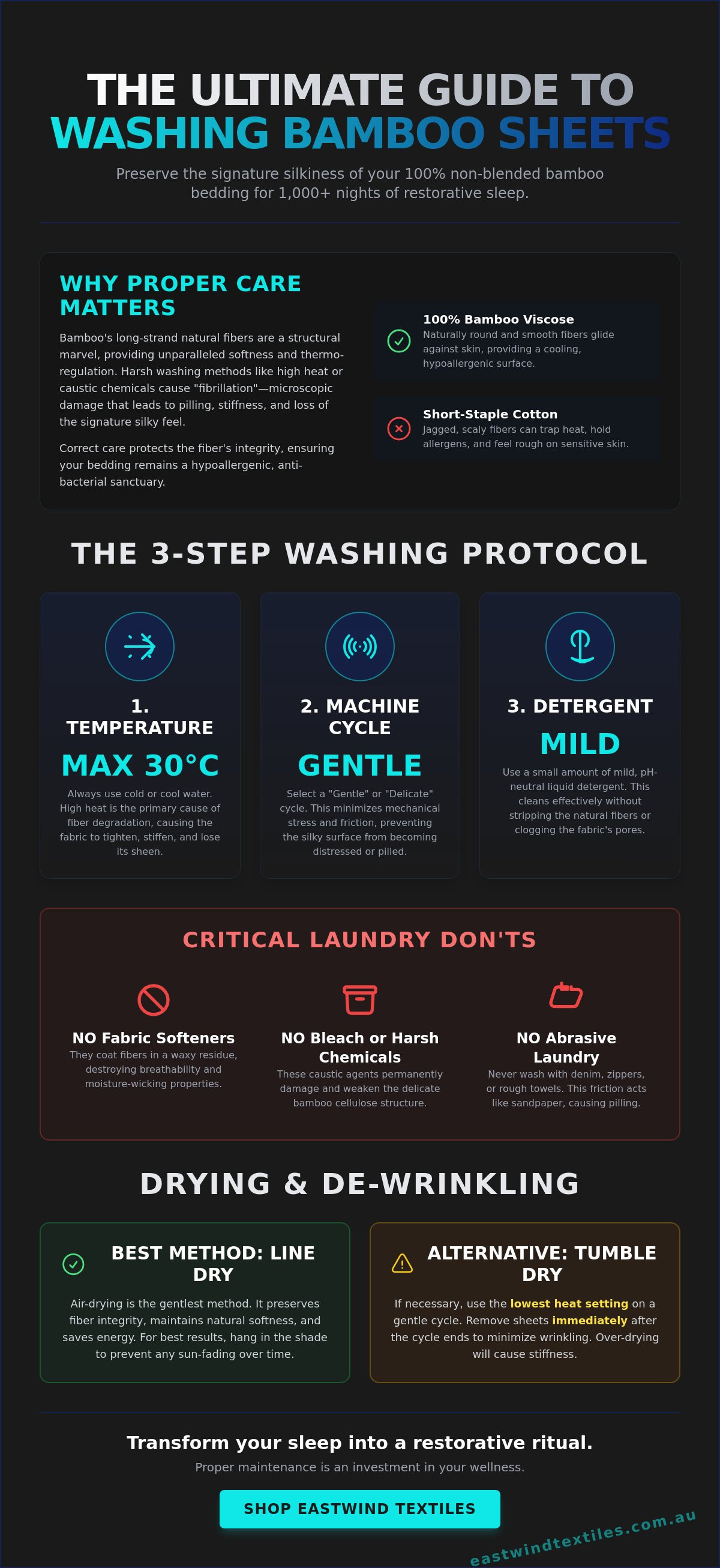
Bamboo isn't just a sustainable plant choice; it's a structural marvel that demands a specific touch. When you invest in 100% bamboo viscose, you're choosing a long-strand natural fibre designed for opulence and longevity. Understanding how to wash bamboo sheets starts with respecting the integrity of these strands. Unlike short-staple cotton that can handle rougher treatment, bamboo’s silky surface is susceptible to "fibrillation" if exposed to high heat or caustic chemicals. These harsh elements act like microscopic sandpaper, breaking down the smooth exterior and leading to premature pilling or a loss of that signature luster.
The purity of your bamboo sheet sets the foundation for its care requirements. We focus on 100% non-blended bamboo because blends often introduce synthetic polyesters that trap heat and react differently to water temperatures. By maintaining a clinical focus on fibre purity, we ensure your bedding remains a tool for restorative sleep rather than a source of skin irritation. Proper care preserves the life changing quality of these textiles for years, not just months.
Understanding the Bamboo Viscose Structure
At a microscopic level, bamboo fibres are remarkably round and smooth. While cotton fibres have jagged, scaly edges that can trap heat and scrape against sensitive skin, the bamboo structure remains sleek. This unique Bamboo textile morphology is the secret behind the fabric's 99% anti-bacterial rating and its cooling, hypoallergenic benefits. It's a functional health solution for those with eczema or night sweats. Because the material is exceptionally porous to facilitate moisture-wicking, it's highly sensitive to heavy body oils and the thick silicones found in many commercial detergents.
The Initial Wash: Breaking in Your Luxury Bedding
When you first slide your new linens out of their eco-conscious packaging, they may feel slightly crisp or "stiff" to the touch. This is a natural characteristic of the tight weave used in premium bamboo attributes. To unlock the maximum softness, your first cycle is the most important. A gentle, cold water wash allows the fibres to expand and relax, transitioning the fabric from its manufactured state to its true, buttery-soft potential.
Follow these steps for your first ritual:
- Select a gentle or "delicate" cycle to prevent mechanical stress.
- Use a small amount of mild, liquid detergent.
- Avoid fabric softeners entirely, as they coat the fibres in a waxy residue that destroys breathability.
Learning how to wash bamboo sheets correctly from day one ensures that the "stiff" factory finish is replaced by a drape that feels like a second skin. This initial wash is the bridge between a new product and a life changing sleep experience.
Step-by-Step: How to Wash Bamboo Sheets for Lasting Softness
Caring for your 100% non-blended bamboo bedding is an intentional act of preservation. This fabric is a high-performance tool for restorative sleep, requiring a specific laundry ritual to maintain its thermo-regulating and hypoallergenic properties. When you master how to wash bamboo sheets, you protect the structural integrity of the fibers, ensuring they remain silky and indulgent for years. The process begins with a commitment to gentle handling and precise temperature control.
The golden rule for bamboo care is simple: keep it cool. Water temperatures should never exceed 30 degrees Celsius. High heat acts as a catalyst for fiber degradation, causing the natural cellulose to tighten and lose its signature sheen. Always select a gentle or delicate cycle on your machine. This setting reduces mechanical friction, preventing the surface of the fabric from becoming distressed. According to the Laundry Basics provided by the American Cleaning Institute, proper sorting is essential for fabric longevity. Never wash your bamboo linen with abrasive items like denim, heavy zippers, or rough towels. These textures act like sandpaper against the delicate bamboo weave, leading to premature pilling and a loss of that ultra-soft hand-feel.
Choosing the Right Detergent for Bamboo
The chemistry of your wash is just as important as the mechanics. Liquid detergents are vastly superior to powders for bamboo because they dissolve instantly and lack the abrasive granules found in many powdered brands. Avoid any products containing bleach, chlorine, or optical brighteners. These harsh chemicals strip the natural anti-bacterial properties from the fibers and can cause yellowing. While 'bio' detergents are popular for stain removal, they often contain aggressive enzymes that can weaken natural plant-based fabrics. Stick to a pH-neutral, liquid formula specifically designed for delicate natural fibers to keep your bedding in pristine condition.
Temperature and Cycle Settings
Excessive heat 'cooks' bamboo fibers. This results in significant shrinkage and a brittle texture that negates the fabric's natural drape. Ensure your load size allows for movement; the sheets need enough space in the drum to circulate freely. Overcrowding the machine leads to uneven cleaning and can trap detergent in the folds. A thorough rinse cycle is a final, critical step. It ensures every trace of soap is removed, which is vital for maintaining the breathability of your life changing bed linen. Proper rinsing also ensures the sheets remain non-irritating for those with sensitive skin or medical needs, providing the pure, clean environment required for deep recovery.
Drying and De-wrinkling: Preserving the Silky Sheen
The moment your linens leave the machine, they require a gentle touch to maintain their restorative properties. While the instinct might be to speed up the process, heat is the enemy of bamboo's delicate structure. Mastering how to wash bamboo sheets is only half the journey; the drying phase determines whether your bedding retains its ultra-soft, liquid-like drape or becomes unnecessarily stiff. Proper care ensures you continue to enjoy the opulence of your investment for years to come.
Line Drying in the Australian Sun
Air-drying is the gold standard for longevity and environmental responsibility. However, the Australian sun is notoriously intense. High UV levels can break down natural fibers, leading to brittleness and fading in dyed fabrics. To protect your investment, hang your sheets in a shaded, well-ventilated area. White bamboo fabrics can benefit from the natural bleaching effect of mild sunlight, but deep-toned dyes like charcoal or navy will oxidize and lose their vibrancy if left in the midday sun for more than 60 minutes.
Bamboo is naturally thermo-regulating and moisture-wicking, meaning it releases water approximately 40% faster than traditional cotton. To prevent the stiff feeling often associated with line drying, use the shake out method. Give each piece a vigorous, snap-like shake before pinning it to the line. This movement acts as a mechanical de-wrinkler, utilizing the weight of the wet fabric to pull out creases before they set. This simple step ensures you feel the difference in texture without needing an iron.
Tumble Drying on Low Heat
If convenience is your priority, tumble drying is acceptable as long as you follow strict temperature protocols. Only use the low heat or air fluff settings. Excessive heat can shrink the 100% non-blended bamboo fibers and destroy the silky sheen that makes this life changing bed linen so unique. If you've been researching how to wash bamboo sheets to help with skin sensitivities, keeping the fibers smooth is essential.
- The 90% Rule: Remove your sheets from the dryer while they're still slightly damp to the touch.
- Indoor Finish: Drape the damp sheets over a railing or directly onto the bed to finish drying. The remaining moisture helps the fabric settle flat under its own weight.
- Avoid Dryer Sheets: Never use dryer sheets or fabric softeners. These products coat the breathable, hypoallergenic fibers in a waxy residue that reduces absorbency and can irritate those with medical skin needs.
By avoiding high-heat cycles and choosing these nurturing methods, you preserve the technical integrity of the fabric. The result is a smooth, indulgent surface that facilitates a night of restorative sleep and keeps your bedroom looking like a high-end sanctuary.
Specialized Care: Stains, Pilling, and Longevity
Maintaining the opulence of your bedding requires more than just a standard laundry day. Understanding how to wash bamboo sheets properly ensures that the silky, thermo-regulating fibers remain intact for years. Unlike mass-market sets, 100% non-blended bamboo is naturally more resilient against pilling. The long-staple fibers don't break as easily as those found in cheaper bamboo-polyester blends, which often show significant wear after only 3 or 4 washes. Investing in pure bamboo means you're choosing a fabric that respects both your skin and the environment.
Gentle Stain Removal for Bamboo
If you notice a blood stain on white sheets, act fast. Rinse the area with cold water immediately; warm water sets the protein and makes removal nearly impossible. Apply a small amount of mild liquid soap and rub the fabric against itself gently until the mark lifts. For the persistent yellowing caused by body oil build-up, a 20-minute soak in a solution of one part baking soda and two parts white vinegar works wonders to restore the fabric's original luster. Oxygen-based whiteners are the only safe 'bleach' alternative to maintain the integrity of the OEKO-TEX® certified fibers without causing chemical damage.
Preventing and Treating Pilling
Friction is the primary enemy of smooth linen. Rough pajamas, facial stubble, or untrimmed pet claws act like sandpaper on the fabric surface, creating tiny knots of fiber. A gentle wash cycle serves as your first line of defense, reducing the mechanical abrasion that leads to surface fuzz. This careful handling preserves the hypoallergenic properties that make these sheets essential for sensitive skin. If minor pilling does occur, use a high-quality fabric shaver to carefully remove the pills without snagging the base weave. Learning how to wash bamboo sheets with minimal agitation prevents these issues before they start.
Storage is the final step in your care ritual. Keep your sets in a cool, dry place to prevent the stale scent often found in enclosed linen cupboards. Avoid plastic storage bins. These trap moisture and can lead to yellowing within 6 months of storage. Instead, use the breathable fabric bag your sheets arrived in to allow the material to remain fresh and airy. This simple habit protects the clinical purity of the fabric, ensuring every night feels like a restorative retreat.
Experience the enduring softness of life changing bed linen that stays luxurious wash after wash.
The Eastwind Philosophy: Maintenance for Life-Changing Bed Linen
Mastering how to wash bamboo sheets is more than a simple household chore; it's a commitment to your long-term health and the longevity of your investment. When you treat your 100% non-blended bamboo with the respect it deserves, you preserve the technical benefits that make it life changing bed linen. Understanding how to wash bamboo sheets correctly prevents the breakdown of the delicate cellulose structure, ensuring the fibers remain thermo-regulating and hypoallergenic. These properties provide a clinical sanctuary for sensitive skin, and maintaining a strict cleaning schedule ensures these anti-bacterial benefits remain effective for years.
A strategic linen rotation is the most effective way to extend the life of your collection. We recommend owning at least three sets of Eastwind sheets. This cycle allows one set to be in use, one to be resting in storage, and one to be laundered. By rotating your linens, you reduce the frequency of washes for each individual set, which can increase the lifespan of the fabric by up to 33%. This ensures the silky, ultra-soft texture remains intact without the premature thinning caused by constant friction. It's a simple habit that transforms high-end bedding into a permanent pillar of your wellness routine.
Storing Your Sheets to Maintain Freshness
Your storage habits are just as vital as your washing technique. Never use plastic storage bins. Plastic traps moisture and prevents the natural fibers from breathing, which often leads to a yellowed appearance or a stale odor. Instead, use the 100% bamboo fabric bags provided with your Eastwind purchase. These bags allow for essential airflow while protecting the fabric from dust. In humid climates where moisture levels frequently exceed 60%, keep your linen cupboard in a cool, dry area to prevent mildew. For an added touch of luxury, tuck a natural lavender sachet between the folds. This provides a subtle, calming scent that complements the purity of the fabric and prepares your mind for restorative sleep.
When to Refresh Your Sanctuary
Even the highest quality OEKO-TEX® certified bamboo eventually reaches the end of its lifecycle. Look for signs of thinning in the center of the fitted sheet or a noticeable loss of elasticity in the corners. If the fabric no longer feels silky against your skin or struggles to regulate your temperature at night, it's time for a replacement. Don't discard your old sets, though. Bamboo’s high absorbency makes it perfect for repurposing. Cut old sheets into ultra-soft cleaning cloths that won't scratch delicate surfaces, or use them as breathable covers for garden plants during frost. When you're ready to upgrade your sleep experience, feel the difference of a fresh set of 100% bamboo sheets today.
Protect Your Investment in Restorative Sleep
Mastering how to wash bamboo sheets is more than just a routine chore; it's a vital investment in your nightly well-being. By choosing cold water settings and avoiding harsh chemical softeners, you protect the delicate structural integrity of the 100% non-blended bamboo fibers. Since 2010, our Australian family-owned business has focused on these technical details to ensure your bedding remains ultra-soft and thermo-regulating for years to come. Proper maintenance preserves the OEKO-TEX® certified purity that makes our linens a trusted choice for sensitive skin and allergy sufferers. As an NDIS registered provider, we believe that restorative sleep is a fundamental health essential rather than a simple indulgence. When you treat these silky fibers with the gentle care they deserve, they'll continue to offer the hypoallergenic relief your body needs to recover. You're not just maintaining fabric. You're preserving a sanctuary of calm that supports your health every single night. Experience the opulence of bedding that's designed to last and nurtured to stay soft.
Shop our range of 100% premium bamboo sheet sets and feel the difference tonight.
Frequently Asked Questions
Can you wash bamboo sheets in hot water?
No, you shouldn't wash bamboo sheets in hot water because high temperatures damage the delicate natural fibres and strip the fabric of its silky lustre. Stick to a cold or lukewarm cycle, ideally kept under 30 degrees Celsius, to preserve the structural integrity of the weave. Heat causes 100% non-blended bamboo to lose its thermo-regulating properties and leads to significant shrinkage.
What is the best detergent for bamboo sheets in Australia?
The best detergent for bamboo sheets in Australia is a gentle, liquid, pH-neutral formula free from optical brighteners and harsh enzymes. Plant-based brands like Earth Choice or Ecostore provide excellent options that cleanse without stripping the fabric's natural oils. Avoid powder detergents, as they often contain abrasive particles that can tear the ultra-soft surface of your luxury bedding.
How often should I wash my bamboo bedding?
You should wash your bamboo bedding every 7 to 10 days to maintain optimal hygiene and skin health. Regular laundering prevents the buildup of body oils and skin cells that can compromise the hypoallergenic benefits of the material. This weekly ritual ensures your life changing bed linen remains a fresh, anti-bacterial sanctuary for restorative sleep. Feel the difference that clean, breathable fabric makes to your nightly recovery.
Do bamboo sheets shrink in the dryer?
Yes, bamboo sheets can shrink by up to 6% if they're exposed to high heat in a tumble dryer. To prevent this, always use the lowest heat setting or a delicate cycle if you cannot air dry them. Learning how to wash bamboo sheets correctly involves protecting the fibre length, ensuring your investment maintains its generous drape and silky fit over time.
Can I use fabric softener on bamboo sheets?
No, you don't need fabric softener because bamboo is naturally one of the softest textiles on Earth. Softeners leave a waxy residue that clogs the pores of the fabric, reducing its breathability and moisture-wicking capabilities. Instead, trust the inherent indulgence of the 100% non-blended bamboo to provide a smooth, opulent feel against your skin without any chemical additives.
How do I get my bamboo sheets white again without bleach?
To restore the brilliance of white sheets without harsh bleach, add 125ml of baking soda to the wash cycle or 125ml of white vinegar during the rinse. These natural agents lift stains and neutralise odours without damaging the OEKO-TEX® certified fibres. Avoid chlorine bleach entirely, as it creates a chemical reaction that yellows bamboo and weakens the structural integrity of the weave.
Why are my bamboo sheets pilling after the first wash?
Pilling usually occurs due to friction against rougher fabrics or excessive heat during the drying process. If you notice small bobbles after the first wash, it's often because the sheets were laundered with abrasive items like towels or heavy denim. Always wash your luxury bedding separately to keep the surface ultra-soft and prevent the friction that disrupts the long-staple fibres.
Is it better to line dry or tumble dry bamboo sheets?
Line drying is the superior choice for bamboo sheets as it uses gentle airflow to preserve the fabric's strength and natural lustre. Hanging your linen in a shaded spot avoids the direct UV damage that can occur in 40-degree Australian summers. While a low-heat tumble dry is acceptable for convenience, air drying ensures your bedding retains its signature silkiness and eco-conscious longevity.